
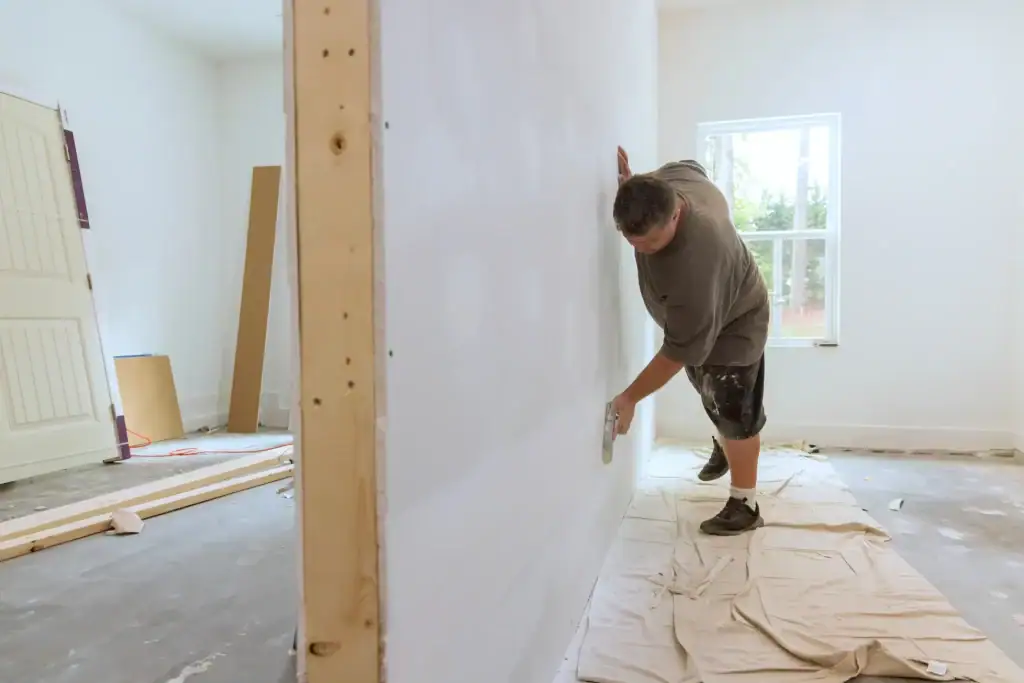
A fresh coat of paint can change the entire feel of a room. It can make a space look brighter, cleaner, newer, and more inviting. But paint can only look as good as the surface underneath it. If your walls have cracks, nail holes, dents, rough patches, or uneven texture, those flaws can still show after painting.
That is why drywall repair before painting is such an important step.
Many homeowners focus on paint colors, finishes, and accent walls, but wall prep is what gives the finished room a clean and polished look. Even the best paint can look uneven when applied over damaged drywall. Small dents can catch the light. Cracks can reopen. Poor patches can create bumps. Old nail holes can leave shadows under certain lighting.
Before any interior painting project begins, the drywall should be properly checked, repaired, sanded, and primed. This helps the paint bond better and creates a smoother surface from corner to corner.
If you want your next painting project to look clean and last longer, don’t skip drywall repair. It is one of the most important parts of a quality interior paint job.
Why Drywall Repair Before Painting Matters
Drywall damage is common in almost every home. Furniture bumps the wall. Doors swing open too far. Picture frames leave nail holes. Settling can create hairline cracks. Daily living slowly adds dents, scratches, and scuffs.
These marks may seem small, but paint can make them stand out more than expected.
When light hits a freshly painted wall, it can reveal surface flaws that were easier to ignore before. A dent that looked minor on an old wall may become obvious under a new satin or eggshell finish. A barely visible crack may draw attention once the wall color changes.
Drywall repair before painting helps create a better base for the new finish. It can improve:
Paint coverage
Wall smoothness
Color consistency
Finish quality
Long-term durability
Overall room appearance
Good prep also helps prevent future issues. If cracks, loose drywall tape, or damaged corners are ignored, they may continue to worsen after painting. Repairing them first gives the wall a stronger foundation before primer and paint are applied.
Paint Does Not Hide Wall Damage
One of the biggest painting myths is that a new coat of paint will hide drywall damage. In most cases, paint does the opposite. It can make damage more noticeable.
Paint adds color, but it does not fill holes, flatten bumps, or smooth rough patches. It follows the shape of the surface underneath. If the wall has a dent before painting, the dent will still be there after painting. If the wall has an uneven patch, paint may make the difference in texture easier to see.
This is especially true in rooms with natural light. Sunlight coming through windows can reveal every ridge, seam, and repair mark. Hallway lighting, bathroom lighting, and overhead fixtures can also highlight wall flaws.
A smooth paint finish starts before the paint is opened. It starts with checking the drywall, fixing damage, sanding repairs, and applying primer where needed.
Common Drywall Problems That Should Be Fixed First
Before painting, it is helpful to walk through the room and inspect the walls carefully. Look at the surface from different angles. Run your hand over the wall to feel dents or raised areas that may not be easy to see.
Some drywall problems are simple. Others require more attention.
Common issues include nail holes, screw holes, small dents, larger holes, hairline cracks, corner damage, popped nails, loose tape, water stains, rough patches, and uneven old repairs.
Each problem needs the right repair method. A tiny nail hole does not require the same approach as a cracked seam or damaged corner bead. Using the wrong repair method can leave the wall looking uneven after painting.
That is why careful prep matters. The goal is not just to cover damage. The goal is to restore the surface so the new paint looks smooth.
Fixing Small Nail Holes Before Painting
Small nail holes are among the easiest drywall repairs. These are often left behind when photos, shelves, mirrors, or wall decor are removed.
For small holes, lightweight spackling compound is usually enough. The hole should be filled slightly past the surface, allowed to dry, then sanded smooth. The repair should blend into the wall so it cannot be felt when you run your hand across it.
Even tiny holes should not be ignored. Once a new color goes on the wall, those little dark marks can still show. They can also create small texture differences if painted over without filling.
After sanding, the area should be cleaned of dust. A quick wipe with a clean cloth helps keep the paint from mixing with sanding residue.
For the best result, patched areas should be primed before painting. Primer helps prevent dull spots, also called flashing, where patched areas absorb paint differently than the surrounding wall.
Repairing Dents and Dings in Drywall
Dents and dings are common in busy homes. They can come from chairs, toys, moving boxes, door handles, or daily contact in hallways and bedrooms.
Shallow dents can often be repaired with spackle or joint compound. The damaged area should be filled, smoothed, dried, sanded, and checked again. Sometimes a second coat is needed because patching material can shrink as it dries.
Larger dents may need a wider patch so the repair blends into the wall. A repair that is too small or too thick can create a visible bump. Feathering the edges helps the patched area transition smoothly into the surrounding surface.
This step is important because dents often become more noticeable after painting. A new finish can catch light differently across the wall, making low spots stand out.
Smooth sanding is key. The repaired area should not feel raised, rough, or uneven. If you can feel the repair, there is a good chance you will see it after painting.
Repairing Cracks Before Painting
Cracks should always be checked before painting. Some are small hairline cracks caused by normal settling. Others may appear near doors, windows, ceilings, or corners.
A quick coat of paint over a crack is not a lasting fix. The crack may return, especially if the surface underneath was not repaired properly.
For fine cracks, the area may need to be opened slightly, filled with joint compound, sanded, and primed. For wider cracks or cracks along drywall seams, tape may be needed to reinforce the repair. This helps reduce the chance of the crack showing again soon after painting.
Cracks near corners or ceiling lines require careful attention because they are often more visible. If the repair is rushed, the finished wall may still show an uneven line.
Before repairing cracks, it is important to remove loose material. Any flaking paint, loose drywall compound, or weak edges should be cleared away. A strong repair needs a stable surface.
Fixing Larger Holes in Drywall
Larger holes require more than a little spackle. These may come from door handles, accidents, plumbing work, electrical updates, or damaged wall sections.
For medium holes, a drywall patch may be used. For larger holes, the damaged section may need to be cut out and replaced with a new piece of drywall. The repair must then be taped, coated with joint compound, dried, sanded, and primed.
This type of repair takes more skill because the patch needs to sit flush with the wall. If the patch is too high, too low, or poorly blended, it can be visible after painting.
The surrounding texture also matters. If the wall has a light texture, the repaired area may need to be matched to blend in. Smooth walls can be even less forgiving because small ridges or sanding marks are easy to see.
When larger holes are involved, many homeowners choose to call Cooley Brothers for help before painting. Professional drywall repair can make a major difference in the final look.
Popped Nails and Screws Need Attention
Nail pops look like small bumps or circles on the wall. They happen when nails or screws shift slightly and push against the drywall surface.
Painting over a nail pop will not solve the problem. The bump can still show, and it may become more noticeable with fresh paint.
A proper repair usually involves securing the drywall, removing or resetting the popped fastener, patching the area, sanding it smooth, and priming before painting.
This is a small detail, but it matters. Nail pops can interrupt an otherwise smooth wall. In rooms with bright lighting, they can be easy to spot after painting.
Addressing them during wall prep helps create a cleaner finish.
Loose Drywall Tape and Seam Problems
Drywall tape is used to cover seams between drywall sheets. Over time, it can loosen, bubble, crack, or lift. This often appears as a raised line, wrinkle, or split along the wall or ceiling.
Loose tape should not be painted over. Paint may cover the color difference, but it will not flatten the tape or stop it from lifting further.
Repairing drywall tape often requires removing the loose section, applying new tape, adding joint compound, sanding, and priming. This process may require several coats to properly blend the seam.
Seam repairs should be handled carefully because they can be long and visible. A poorly repaired seam can show through the paint, especially on large walls or in rooms with sidelighting.
If the tape damage is widespread, professional repair is usually the better choice.
Water Stains and Drywall Damage
Water stains should never be ignored before painting. A stain may be from an old leak, a plumbing issue, a roof problem, or a moisture concern. Before painting, the source of the moisture should be addressed.
Once the area is dry and stable, damaged drywall may need repair. Soft, swollen, crumbling, or stained sections may need more than surface patching.
After repair, stain-blocking primer may be needed before paint. Without the right primer, water stains can bleed through the new paint, causing discoloration.
Painting directly over a stain may look fine at first, but the mark can return later. Proper prep helps protect the final finish.
Why Sanding Is So Important
Sanding is one of the most important steps in drywall repair before painting. It smooths patched areas and helps them blend into the surrounding wall.
However, sanding needs to be done carefully. Too little sanding can leave ridges or bumps. Too much sanding can damage the drywall paper or create low spots.
The goal is to make the repair level with the wall. A good test is to run your hand over the patched area. If your hand catches an edge or raised spot, more smoothing may be needed.
After sanding, dust must be removed. Dust can interfere with primer and paint adhesion. It can also create a gritty texture in the finish.
A clean wall gives primer and paint a better surface to bond to.
Primer Helps Repairs Blend In
Primer is often the step that separates a decent paint job from a better one. After drywall repair, primer helps seal patched areas and create a more even surface for paint.
Joint compound and spackle absorb paint differently than painted drywall. If those patches are not primed, they may appear dull or uneven after the finish coats dry.
This is known as flashing. It can make repairs stand out, even if they were sanded well.
Primer helps balance the surface. It improves coverage and gives the paint a more consistent base. In some cases, spot priming repaired areas is enough. In other cases, priming the full wall may be the better choice, especially if there are many repairs.
Matching Wall Texture Before Painting
Not all walls are perfectly smooth. Some have orange peel, knockdown, or other light textures. When drywall is repaired, the texture should be matched before painting.
If a smooth patch is left in the middle of a textured wall, it can stand out. Even with the same paint color, the difference in texture may catch the light.
Texture matching takes patience. The repaired area should blend naturally with the rest of the wall. It should not look heavier, flatter, or more raised than the surrounding surface.
This is one reason drywall repair before painting can be more detailed than it first appears. The repair is not finished until the surface looks and feels consistent.
DIY Drywall Repair Before Painting
Some drywall repair can be handled as a DIY project. Small nail holes, light dents, and minor scuffs are usually manageable with basic tools and patience.
For simple repairs, you may need spackle, a putty knife, a sanding sponge, primer, clean cloths, and paint. Work slowly and avoid applying too much patching material at once. Thin layers are easier to sand and blend.
DIY repairs are best for small, low-risk areas. A tiny hole behind a door or a light dent in a spare room may be a good place to start.
But if the wall has cracks, large holes, water damage, loose tape, texture issues, or many patches, the project can become more difficult. Repairing drywall is not just about filling damage. It is about making the wall look smooth after the paint is applied.
That final result takes practice.
When to Hire Cooley Brothers for Drywall Repair Before Painting
Hiring Cooley Brothers is a smart choice when the drywall damage is larger, more visible, or more complicated. It is also a good option when you want the finished room to look clean and consistent.
You may want professional help if there are several cracks, large dents, damaged corners, loose tape, water stains, or holes larger than a small nail mark. Professional help is also useful when the repair is in a main living space, entryway, hallway, kitchen, or bedroom, where flaws are easy to notice.
Cooley Brother can repair the wall, sand the surface, prime the repaired areas, and paint with the final finish in mind. This helps avoid the common problem of repairs showing through after the paint dries.
Professional prep can also save time. Drywall repair often requires drying time between coats, sanding, cleanup, and primer. When handled in the right order, the painting process goes more smoothly.
How Drywall Repair Improves the Final Paint Finish
Drywall repair before painting improves the room’s look and feel. It helps the walls look cleaner and makes the paint color appear more even.
When walls are properly repaired, paint can glide over the surface more smoothly. The finish looks more consistent because there are fewer bumps, dents, and rough spots catching the light.
Good drywall repair also helps the room feel newer. Even with a simple paint color, smooth walls can make the entire space feel more cared for.
This is especially important if you are repainting before hosting, moving in, selling a home, or updating a space that has not been painted in years. Wall damage can make a room feel older than it is. Repairing it first helps the new paint make a stronger impact.
Room-by-Room Drywall Repair Considerations
Different rooms often have different types of wall damage.
Hallways tend to accumulate dents, scuffs, and corner damage because they see heavy traffic. Bedrooms may have nail holes from wall decor, shelves, or mounted items. Living rooms may have old picture holes, cable access marks, or furniture dents.
Bathrooms can have moisture-related drywall concerns. Before painting these spaces, stains, peeling areas, and soft spots should be checked carefully.
Kitchens may have dents, grease residue, or wall damage near cabinets and backsplashes. Cleaning and prep are especially important before painting these areas.
Each room should be inspected on its own. The amount of drywall repair needed can vary from wall to wall.
A Smooth Finish Starts With Better Prep
A smooth finish does not happen by accident. It comes from the steps completed before painting begins.
That includes inspecting the drywall, filling holes, repairing cracks, fixing dents, sanding patches, removing dust, priming repairs, and checking the surface under good lighting.
Skipping one step can affect the final result. For example, an unprimed patch may flash. A poorly sanded repair may show a ridge. A crack that was only painted over may reopen.
The prep stage may not be as exciting as choosing a color, but it is what makes the final color look its best.
Final Thoughts on Drywall Repair Before Painting
Drywall repair before painting is one of the best ways to improve the final look of an interior painting project. It helps fix cracks, holes, dents, nail pops, loose tape, and rough patches before they become visible under fresh paint.
Paint alone cannot create a smooth wall. The surface must be repaired, sanded, cleaned, and primed first.
Small repairs may be simple enough for homeowners to handle, but larger or more visible damage is often better left to Cooley Brothers. Professional repair can help the paint look smoother, cleaner, and more even throughout the room.
Before starting your next painting project, take time to look closely at your walls. Fixing the damage first can make all the difference in how the finished space looks and feels.
FAQ
What is drywall repair before painting?
Drywall repair before painting is the process of fixing wall damage before applying primer and paint. This can include filling nail holes, repairing cracks, patching dents, fixing larger holes, sanding rough spots, and priming repaired areas so the wall is ready for a smooth finish.
Do I need to fix small nail holes before painting?
Yes, small nail holes should be fixed before painting. Even tiny holes can show through a fresh coat of paint, especially in rooms with bright light. Filling, sanding, and priming these spots helps the final paint finish look cleaner.
Can paint cover drywall cracks?
Paint may temporarily cover the color of a crack, but it will not properly repair it. Cracks should be filled and reinforced when needed before painting. This helps reduce the chance of the crack showing again after the wall is painted.
Why do drywall patches show through paint?
Drywall patches can show through paint when they are not sanded properly or when primer is skipped. Patching material absorbs paint differently from the rest of the wall. Primer helps seal the repair and creates a more even surface for the finish coats.
When should I hire Cooley Brothers for drywall repair before painting?
You should hire Cooley Brothers when the wall has large holes, many dents, cracks, loose tape, water stains, texture issues, or visible damage in an important room. Professional drywall repair before painting helps create a smoother surface and a cleaner final result.

David Cooley, the esteemed owner of Cooley Brothers Painting, has established himself as a leading figure in the painting industry. With a rich history of delivering unparalleled service in Torrance, Manhattan Beach, Palos Verdes Estates, Redondo Beach, and Rolling Hills, his hands-on approach and dedication to quality have shaped Cooley Brothers Painting into a trusted name for exceptional painting services. With a focus on innovation, customer satisfaction, and community engagement, David’s leadership continues guiding his team toward new heights of excellence and reliability in every project.

