Planning to repaint your home’s exterior? Before the first coat goes on, the wood underneath needs to be sound. Here’s what you’ll learn: how to spot wood rot, why it spreads faster near the ocean, and why carpentry repairs should always come before paint.
Wood rot repair in Redondo Beach should happen before any exterior painting, because paint over rotted wood traps moisture and accelerates decay. Coastal homes are especially vulnerable: salt air, ocean humidity, and marine-layer moisture feed the fungus that breaks wood down. Replacing or repairing damaged fascia, trim, and siding first is what makes a new paint job actually last.
What is wood rot, and why is it worse on the coast?
Wood rot is decay caused by fungi that feed on damp wood, gradually destroying its strength. It needs three things to thrive: wood, oxygen, and moisture. In Redondo Beach and across the South Bay, that moisture is constant — the marine layer rolls in most mornings, salt air holds humidity against the house, and shaded north-facing walls stay damp long after the sun is up.
That’s why coastal homes often see rot years sooner than inland ones. The salt doesn’t rot the wood itself, but the humidity it carries keeps surfaces wet enough for fungus to take hold.
What are the signs your home needs wood rot repair?
Catch rot early and the repair is small. Let it spread and it can reach framing. Watch for:
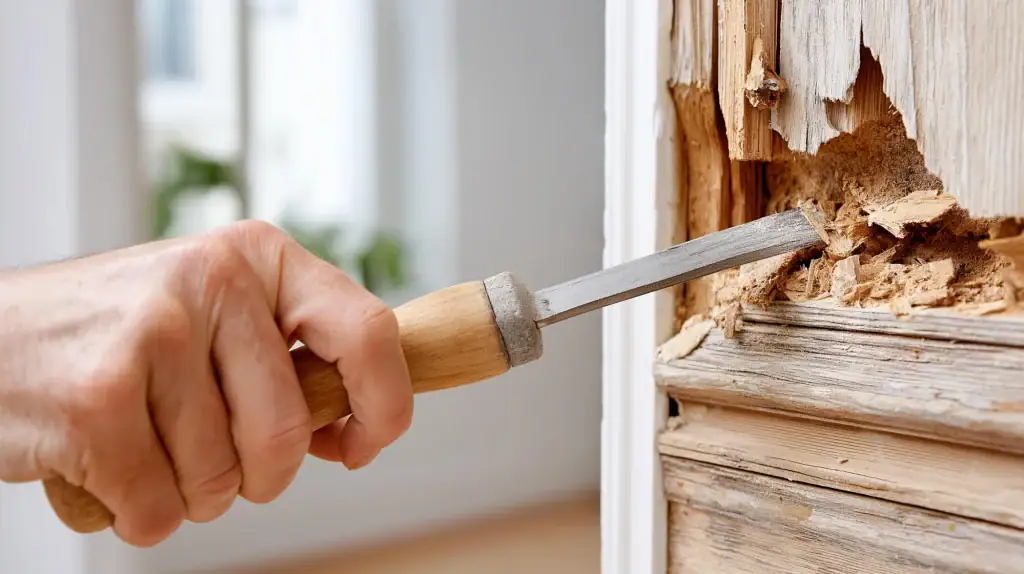
- Soft, spongy wood that gives when you press it
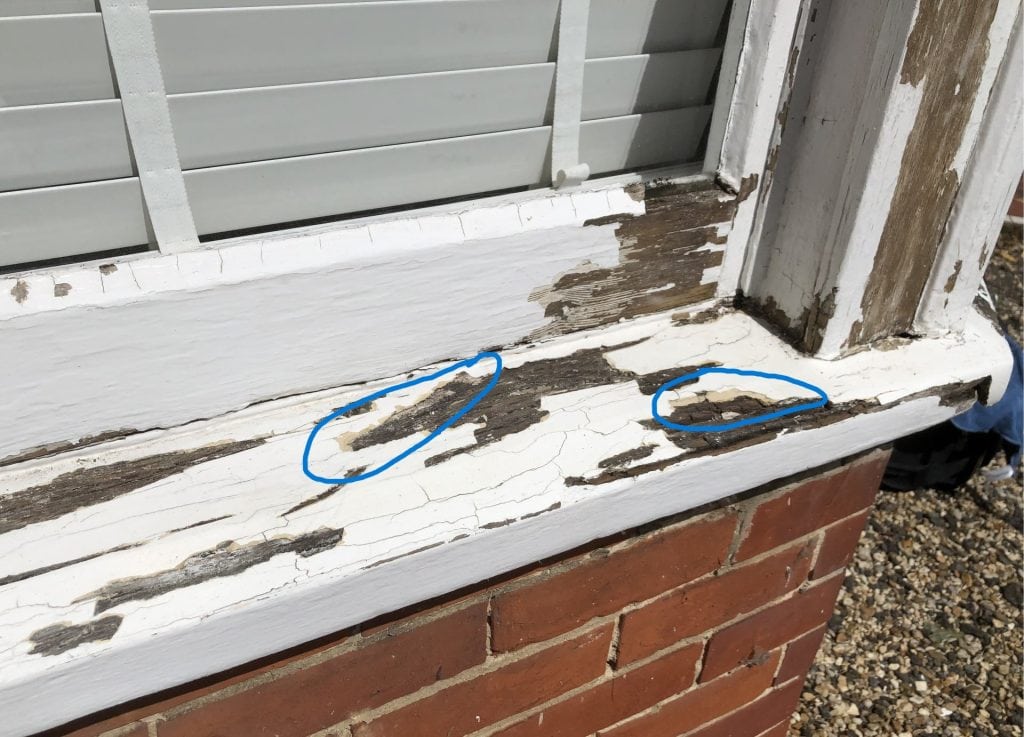
- Paint that bubbles, cracks, or peels in patches
- Dark stains or discoloration on trim and fascia
- A musty, damp smell near windows or eaves
- Crumbling or flaking wood, especially at joints and end grain
- Visible gaps where trim has pulled away from the wall
Which kind of rot do you have?
Not all rot behaves the same way, and the fix depends on the type.
| Type | What it looks like | Spread |
|---|---|---|
| Dry rot | Dry, cracked, cube-shaped crumbling; cottony fungal threads | Spreads fast through dry wood once established |
| Wet rot | Damp, dark, soft and spongy wood | Stays where moisture is; less likely to travel |
Which parts of a coastal home rot first?
Water finds the same weak points on almost every house. The usual suspects in South Bay homes are fascia boards and eaves, window and door trim, sills, the bottoms of siding and corner boards, deck posts, and exterior door frames. Anywhere two pieces of wood meet — or where old caulk has failed — is a likely entry point.
If you’re seeing problems on exterior boards specifically, our guide on when to replace rotten wood walks through the repair-versus-replace decision in detail.
Why repair carpentry before painting?
Paint is a finish, not a fix. Coating over soft or rotted wood seals moisture inside, hides the problem temporarily, and almost guarantees the new paint will fail. Worse, the decay keeps spreading under the surface where you can’t see it.
Doing carpentry first means the new paint bonds to solid, dry wood and can do its real job — protecting the home from the next round of coastal weather. Our carpentry services handle this repair-then-protect sequence as one coordinated project, so there’s no gap where bare wood sits exposed.
What does the repair process look like?
A proper wood rot repair follows a clear sequence:
- Inspect and probe to map the full extent of the damage.
- Remove all rotted and compromised wood back to sound material.
- Replace boards, trim, or fascia with new, primed lumber.
- Address the moisture source — flashing, caulk, or drainage.
- Prime all bare and cut surfaces, including end grain.
- Caulk, seal, and paint to lock out future moisture.
When should you call a pro vs. DIY?
Small, surface-level rot on an accessible board can be a DIY repair with a wood hardener and filler. Call a professional when the rot is structural, located on fascia or second-story trim, widespread, or tied to a recurring leak. For coastal homes especially, the trusted painters in Redondo Beach at Cooley Brothers can repair the carpentry and repaint in one visit — so the fix is done right and protected immediately.
Protect your home before you paint
Cooley Brothers Painting handles carpentry and exterior painting together, so your home is repaired and sealed in a single coordinated project. We proudly serve Torrance and the Palos Verdes Peninsula / South Bay, CA, including Manhattan Beach, Palos Verdes Estates, Rancho Palos Verdes, Redondo Beach, Rolling Hills, and Rolling Hills Estates. Call (310) 378-4575 or visit our contact page to request your free estimate.
Frequently Asked Questions
How do I know if my exterior wood is rotted or just weathered?
Press the wood with a screwdriver. Sound wood stays firm; rotted wood feels soft, spongy, or crumbles. Weathered wood may look gray and rough but stays hard. Bubbling paint and dark stains are early warning signs worth a closer look.
Can you paint over rotted wood to save money?
No — and it costs more in the long run. Painting over rot traps moisture, hides the decay, and causes the new paint to peel quickly while the rot keeps spreading. Repairing the wood first is the only way to get a lasting result.
Why does wood rot faster in Redondo Beach than inland?
Coastal homes face constant moisture from the marine layer, ocean humidity, and salt air that holds dampness against the house. That persistent moisture feeds the fungi responsible for rot, so South Bay homes often need wood repairs sooner than inland properties.
Do you replace fascia and trim as part of painting?
Yes. Fascia and trim replacement is one of our most common carpentry services, and we handle it as part of the exterior painting project so the new wood is primed, sealed, and painted right away for full protection.
How long does exterior carpentry repair take?
Most fascia, trim, and siding repairs take one to three days depending on the extent of the rot and access. We typically complete carpentry and exterior painting back-to-back so your home isn’t left with exposed bare wood between steps.

David Cooley, the esteemed owner of Cooley Brothers Painting, has established himself as a leading figure in the painting industry. With a rich history of delivering unparalleled service in Torrance, Manhattan Beach, Palos Verdes Estates, Redondo Beach, and Rolling Hills, his hands-on approach and dedication to quality have shaped Cooley Brothers Painting into a trusted name for exceptional painting services. With a focus on innovation, customer satisfaction, and community engagement, David’s leadership continues guiding his team toward new heights of excellence and reliability in every project.