Garage floors in Torrance homes go through more wear than many homeowners realize.
They handle parked vehicles, stored boxes, tools, bikes, beach gear, laundry traffic, foot traffic, oil drips, dust, and everyday spills. Over time, bare concrete can become stained, dull, dusty, and unfinished.
That is why many homeowners begin comparing garage floor coating options.
Two of the most common choices are epoxy and polyaspartic coatings. Both can improve the look of a garage floor. Both can help protect concrete. Both can create a cleaner, brighter, and more finished space.
Still, they are not the same.
When comparing epoxy vs polyaspartic garage floor coatings, the best option depends on your goals, budget, timeline, garage condition, and the way you use the space.
Epoxy is often a strong choice for homeowners who want durability, customization, and value. Polyaspartic may be a better fit for homeowners who want faster curing and stronger UV resistance.
The right answer is not always about which product sounds newer or stronger. It is about which coating makes the most sense for your Torrance garage.
What Is an Epoxy Garage Floor Coating?
Epoxy is a resin-based floor coating that bonds to prepared concrete to create a hard, protective surface.
It is commonly used in residential garages because it can help protect the floor from stains, light chemical spills, tire marks, moisture, dust, and daily wear.
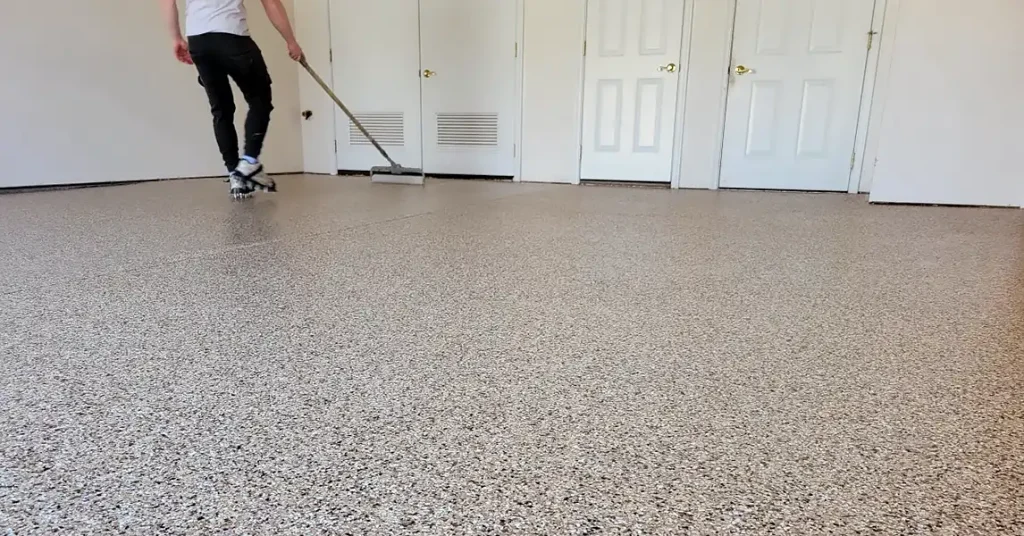
A professionally installed epoxy floor usually involves several steps. The concrete is cleaned and prepared. Cracks or flaws are repaired. The coating is applied in layers. The floor is allowed to cure before regular use resumes.
This process matters because epoxy needs the right surface to perform well. If the concrete is dirty, dusty, oily, or poorly prepared, the coating may not bond correctly.
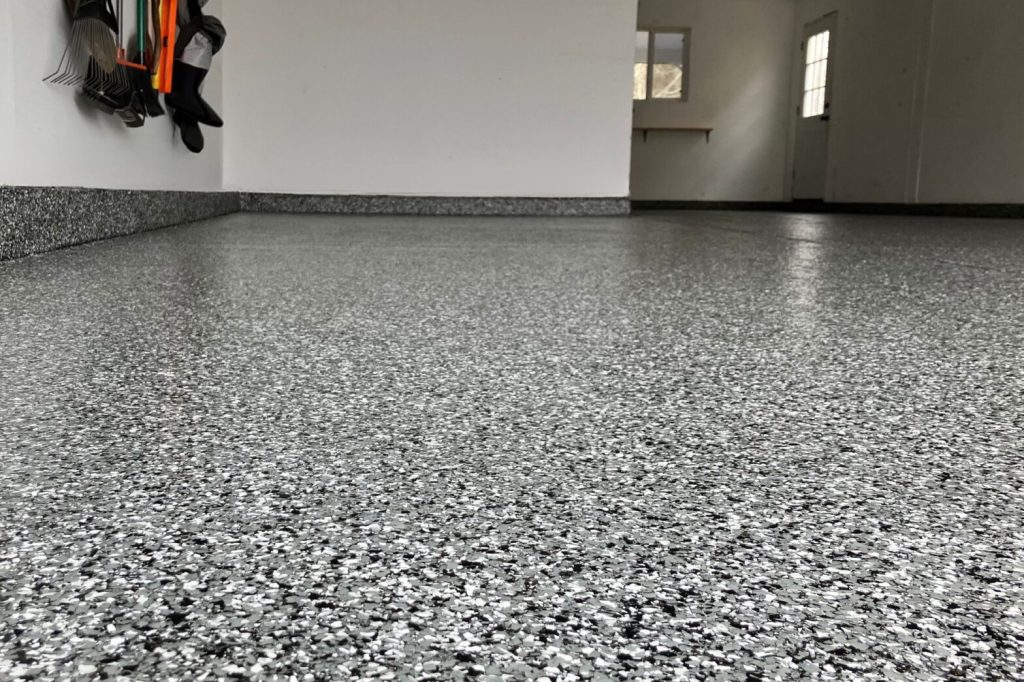
Epoxy can also be customized. Homeowners can choose solid colors, decorative flake finishes, different gloss levels, and texture options.
For many Torrance homeowners, epoxy offers a practical balance of performance, appearance, and cost.
What Is a Polyaspartic Garage Floor Coating?
Polyaspartic is another type of resin floor coating used on concrete garage floors.
It is often compared to epoxy because both options can protect concrete and improve the appearance of the garage.
One of the biggest benefits of polyaspartic is fast curing. In many cases, polyaspartic coatings can be ready for use sooner than traditional epoxy systems.
Polyaspartic coatings are also known for strong UV resistance. That means they are less likely to yellow or fade when exposed to sunlight.
This can be useful in garages that receive direct sun through open doors, windows, or side entrances.
However, polyaspartic coatings often cost more than epoxy. They can also be less forgiving during installation because they cure quickly. That means the installer must work carefully and efficiently.
For some homeowners, the faster cure time and UV resistance are worth the higher cost. For others, epoxy gives them everything they need at a more practical price point.
Epoxy vs Polyaspartic Garage Floor: The Main Difference
The main difference between epoxy and polyaspartic garage floor coatings is how they perform during installation and over time.
Epoxy is known for strong adhesion, durability, design flexibility, and value. It has been used for many years in garages because it creates a tough surface that can withstand normal residential use.
Polyaspartic is known for faster curing, UV resistance, and strong surface performance. It can be a good choice when homeowners need the garage back in use quickly.
In simple terms, epoxy is often the practical choice for homeowners who want a durable, attractive garage floor without moving to a higher-cost coating system.
Polyaspartic is often the premium choice for homeowners who want fast turnaround and better sunlight resistance.
Both can be excellent options when installed correctly.
The better choice depends on your garage floor, budget, schedule, and expectations.
Durability: Which Coating Handles Garage Wear Better?
Durability is one of the biggest reasons homeowners compare epoxy vs polyaspartic garage floor coatings.
A properly installed epoxy floor can handle normal garage use very well. It can withstand parked vehicles, storage bins, foot traffic, tools, and household use.
Epoxy also helps reduce concrete dust and makes the garage easier to clean.
Polyaspartic coatings are also durable. They are known for strong wear resistance and can perform well in garages that see frequent use.
However, durability is not only about the coating material. It also depends on preparation, installation, coating thickness, topcoat quality, and maintenance.
A well-installed epoxy floor can perform better than a poorly installed polyaspartic floor.
That is why professional preparation matters so much. The concrete must be cleaned, profiled, repaired, and made ready before any coating is applied.
For Torrance homeowners, either option can be durable. The key is choosing the right system and making sure it is installed correctly.
Cure Time: Which Floor Is Ready Faster?
Cure time is one of the clearest differences between epoxy and polyaspartic coatings.
Polyaspartic usually cures faster. This can allow homeowners to use the garage sooner after installation.
That can be helpful if your garage is your main parking space, storage area, laundry entry, or daily access point into the home.
Epoxy usually needs more curing time. Depending on the coating system and conditions, homeowners may need to keep vehicles and heavy items off the floor for a longer period.
However, slower curing is not always a bad thing. Epoxy’s working time can give installers more control during application, especially when creating a smooth finish or adding decorative flakes.
If speed is your top priority, polyaspartic may be attractive.
If you can allow proper curing time and want a strong value, epoxy may still be the better fit.
Appearance: Which Coating Looks Better?
Both epoxy and polyaspartic coatings can look beautiful when installed properly.
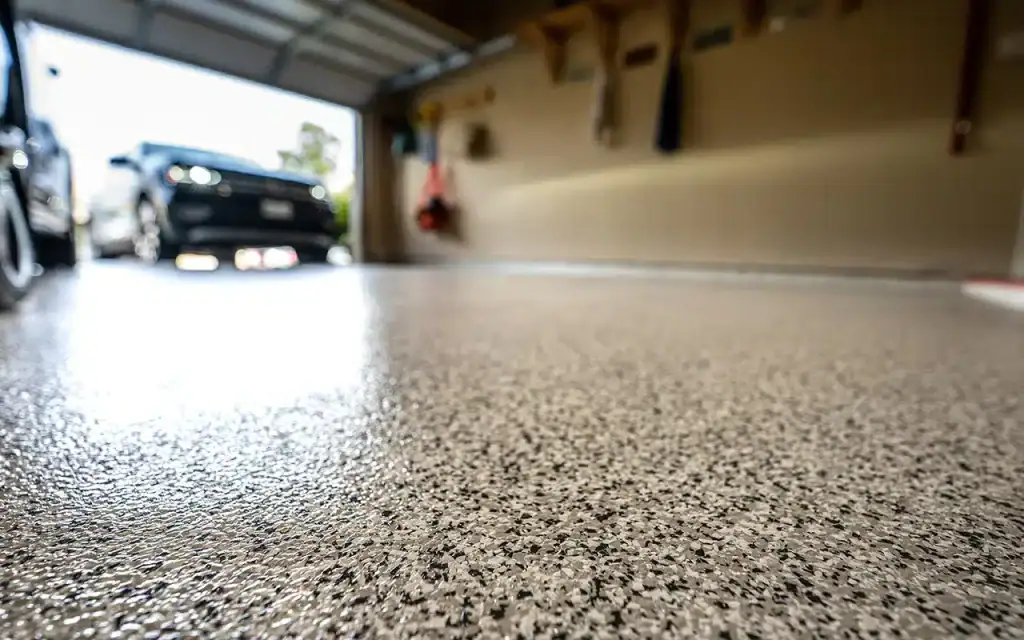
Epoxy can create a clean, glossy, finished appearance. It can turn a plain concrete garage into a brighter and more polished space.
Homeowners can choose decorative flakes, neutral colors, modern gray blends, and different finishes to match the look they want.
Polyaspartic coatings can also look excellent. They are often used with decorative flakes and clear topcoats, creating a finish that may look very similar to epoxy.
In many cases, a homeowner may not know whether a finished decorative flake floor is epoxy or polyaspartic just by looking at it.
The appearance depends more on the coating system, color selection, flake blend, surface prep, and application quality.
If your main goal is a clean and attractive garage floor, both options can deliver.
Cost: Which Garage Floor Coating Is More Budget-Friendly?
Epoxy is usually more budget-friendly than polyaspartic.
This is one reason epoxy remains popular for residential garages. It offers a strong combination of durability, appearance, and value.
Polyaspartic usually costs more because of its fast-curing properties, UV resistance, material costs, and installation requirements.
That does not mean polyaspartic is a bad choice. It simply means homeowners should decide whether the added benefits are worth the higher price.
For many Torrance homeowners, epoxy offers the right balance. It protects the concrete, enhances the garage’s appearance, and provides long-term value without the higher investment of a polyaspartic system.
If your garage gets strong direct sunlight or you need the floor ready very quickly, polyaspartic may be worth considering.
If your priority is value, durability, and a finished look, epoxy is often the more practical choice.
UV Resistance: Does Sunlight Matter in a Garage?
UV resistance matters if your garage floor gets direct sunlight.
Some Torrance garages receive sunlight through open garage doors, side windows, or exterior entry points. Over time, some coatings may yellow or fade when exposed to UV rays.
Polyaspartic generally has better UV resistance than standard epoxy.
This makes it a strong option for garages that get frequent sun exposure.
Epoxy can still work well in many garages, especially when most of the floor is shaded. Many garage floors only receive limited sunlight during the day.
The best choice depends on your garage layout.
If sunlight hits the same section of the floor for hours, ask about coating options that can better handle UV exposure.
If your garage is mostly shaded, epoxy may still be a smart and reliable option.
Surface Preparation: The Step That Matters Most
Surface preparation is one of the most important parts of any garage floor coating project.
This is true for both epoxy and polyaspartic.
The concrete must be clean, dry, strong, and ready to accept the coating. If the floor has dust, oil, moisture, cracks, old paint, sealers, or peeling coatings, those issues need to be addressed before coating begins.
Preparation may include grinding, cleaning, crack repair, patching, and removing weak or failing material.
This step is especially important for older garages.
Many Torrance garage floors have years of wear from cars, storage, tools, and household projects. Even if the surface looks fine from a distance, it may have stains, small cracks, or worn areas that need attention.
A coating is only as good as the surface beneath it.
Skipping preparation can lead to peeling, bubbling, uneven finish, or early failure.
Whether you choose epoxy or polyaspartic, proper prep should never be ignored.
Maintenance: Which Floor Is Easier to Clean?
Both epoxy and polyaspartic garage floors are easier to clean than bare concrete.
Bare concrete can absorb stains, collect dust, and hold dirt. It can also make the garage feel unfinished even when the rest of the space is organized.
A coated garage floor creates a smoother surface that is easier to sweep, vacuum, and mop.
Epoxy floors are known for simple maintenance. Regular sweeping helps remove grit and debris. Occasional mopping can keep the surface fresh. Spills should be cleaned quickly to help protect the finish.
Polyaspartic floors are also easy to maintain. Like epoxy, they benefit from routine cleaning and basic care.
The finish texture can affect maintenance. A decorative flake floor can help hide dust and small marks, but a more textured surface may take a little more effort to mop.
A smoother, glossier floor may be easier to wipe, but it can show dirt more quickly.
For most homeowners, both options are easier to care for than untreated concrete.
Slip Resistance: Which Coating Is Safer?
Garage floors can become slippery when wet, especially if the surface is very smooth.
Both epoxy and polyaspartic coatings can be made more slip-resistant with texture, flakes, or traction additives.
This can be important in Torrance garages where moisture may come from cars, beach gear, rain, cleaning, or outdoor equipment.
A decorative flake system can add texture while enhancing the floor’s appearance.
Slip resistance is not only about choosing epoxy or polyaspartic. It is about choosing the right finish.
If safety is a concern, the coating can be planned with traction in mind.
A professional installer can recommend a finish that balances appearance, cleanability, and grip.
Lifespan: Which Coating Lasts Longer?
Both epoxy and polyaspartic garage floor coatings can last for many years when installed and maintained properly.
Epoxy has a long history of use in residential garages. With good surface preparation, proper installation, and regular maintenance, it can provide long-lasting performance.
Polyaspartic can also last a long time. It is durable and can handle regular garage traffic when installed correctly.
The lifespan of either coating depends on several things.
Garage use matters. A garage used only for parking and light storage will usually be easier on the floor than a garage used for mechanical work, heavy tools, gym equipment, or frequent projects.
Maintenance also matters. Dirt, sand, harsh cleaners, dragging heavy items, and ignored spills can wear down any coating faster.
The concrete condition matters too. If the slab has moisture issues or structural concerns, they should be addressed before coating.
A properly installed epoxy floor can be a strong, long-term investment for many Torrance homes.
Polyaspartic can also be long-lasting, but homeowners should decide whether its added benefits justify the higher cost.
Which Coating Is Better for Torrance Homes?
For many Torrance homes, epoxy is the better all-around choice.
It offers durability, customization, easy maintenance, and strong value. It can make the garage look cleaner and more finished while helping protect the concrete underneath.
Epoxy is especially practical for homeowners who want a dependable garage floor upgrade without paying for premium features they may not need.
Polyaspartic may be better when fast curing is the top priority. It may also be better for garages with heavy direct sunlight exposure.
The best choice depends on your situation.
Choose epoxy if you want a durable, attractive, customizable, and cost-effective garage floor coating.
Choose polyaspartic if you want faster return-to-use, stronger UV resistance, and are comfortable with a higher investment.
Both options can work well. The right one is the coating that fits your garage, lifestyle, and budget.
When Epoxy Makes the Most Sense
Epoxy makes the most sense when homeowners want a practical and attractive floor upgrade.
It is a strong choice when the garage floor is stained, dusty, worn, or unfinished.
It is also a good option when the homeowner wants design flexibility. Decorative flakes, color choices, and different finish levels can make the garage feel more complete.
Epoxy is also appealing because it offers strong value. It can improve the look and function of a garage without requiring the higher price of polyaspartic.
For many Torrance homeowners, epoxy checks the most important boxes.
It is durable, customizable, easier to clean than bare concrete, and suitable for everyday residential use.
When Polyaspartic May Be the Better Choice
Polyaspartic may be the better choice when timing matters most.
If you need the garage ready quickly, the faster curing time can be useful.
It may also be a better choice if your garage receives strong sunlight for long periods. Polyaspartic’s UV resistance can help reduce the risk of yellowing or fading.
Some homeowners also choose polyaspartic because they want a premium coating system and are willing to pay more for those benefits.
However, not every garage needs polyaspartic.
If your garage is mostly shaded, if you can allow proper curing time, and if budget matters, epoxy may be the better choice.
Questions to Ask Before Choosing a Garage Floor Coating
Before choosing between epoxy and polyaspartic, consider how you use your garage.
Do you park vehicles in the garage every day?
Do you use the garage as a workshop?
Does the garage receive direct sunlight?
Is the concrete cracked, stained, dusty, or previously coated?
How quickly do you need to use the garage again?
Do you want a simple finish or a decorative flake system?
Is your top priority cost, cure time, UV resistance, appearance, or long-term value?
These questions make the decision much easier.
A garage floor coating should not be chosen just because one option sounds more advanced. It should be chosen because it fits the actual condition and use of the garage.
Why Professional Installation Matters
Professional installation matters because garage floor coatings depend on more than the product itself.
The concrete must be prepared correctly. Cracks and surface issues must be addressed. The coating must be mixed, applied, and cured properly.
If these steps are rushed, the floor may not last as long as expected.
A professional installer can evaluate the garage floor and recommend the right system based on the concrete’s condition and the homeowner’s goals.
This helps reduce the risk of peeling, bubbling, uneven finish, poor adhesion, and early wear.
For epoxy and polyaspartic coatings, proper installation is a key factor in long-term performance.
A garage floor coating should look good on day one, but it should also hold up after vehicles, storage, tools, and daily life return to the space.
Final Verdict: Epoxy vs Polyaspartic Garage Floor Coatings
So, which is better for Torrance homes?
For many homeowners, epoxy is the better all-around choice because it offers durability, customization, easy maintenance, and strong value.
It can turn a plain concrete garage floor into a cleaner, brighter, and more usable space.
Polyaspartic is also a strong option. It may be the better choice if you need fast curing or stronger UV resistance.
The decision comes down to your garage floor, timeline, budget, and priorities.
If you want a reliable coating with proven residential performance, epoxy is often the practical choice.
If you want faster return-to-use and added sun resistance, polyaspartic may be worth the higher cost.
When comparing epoxy vs polyaspartic garage floor coatings, the smartest choice is the one that matches how your Torrance garage is used every day.
Epoxy vs Polyaspartic Garage Floor FAQs
Is epoxy or polyaspartic better for a garage floor?
Epoxy is often better for homeowners who want durability, design flexibility, and strong value. Polyaspartic may be better when fast curing or UV resistance is the main priority. The right choice depends on your garage condition, budget, and how quickly you need the floor back in use.
Is polyaspartic more expensive than epoxy?
Yes, polyaspartic garage floor coatings usually cost more than epoxy. The higher cost is often tied to faster curing, strong UV resistance, and material performance. Epoxy is often the more budget-friendly choice for many residential garages.
Does epoxy last long enough for a Torrance garage?
Yes, a properly installed epoxy garage floor can last for many years with the right care. Its lifespan depends on surface preparation, installation quality, garage traffic, cleaning habits, and the coating system used.
Can epoxy and polyaspartic both use decorative flakes?
Yes, both epoxy and polyaspartic garage floor coatings can be installed with decorative flakes. Flakes can improve the appearance of the garage floor, add texture, and help hide small marks or dust between cleanings.
Which coating is easier to maintain?
Both epoxy and polyaspartic coatings are easier to maintain than bare concrete. Regular sweeping, quick spill cleanup, and mild cleaning products can help keep either surface looking good. The finish texture may affect how easily the floor can be mopped or swept.

David Cooley, the esteemed owner of Cooley Brothers Painting, has established himself as a leading figure in the painting industry. With a rich history of delivering unparalleled service in Torrance, Manhattan Beach, Palos Verdes Estates, Redondo Beach, and Rolling Hills, his hands-on approach and dedication to quality have shaped Cooley Brothers Painting into a trusted name for exceptional painting services. With a focus on innovation, customer satisfaction, and community engagement, David’s leadership continues guiding his team toward new heights of excellence and reliability in every project.