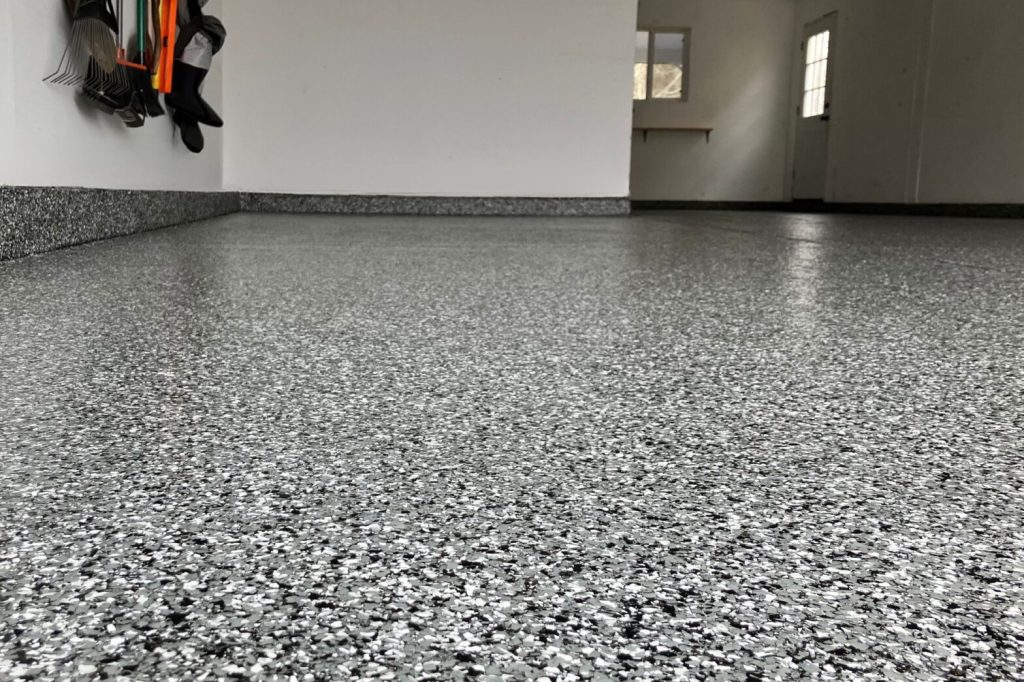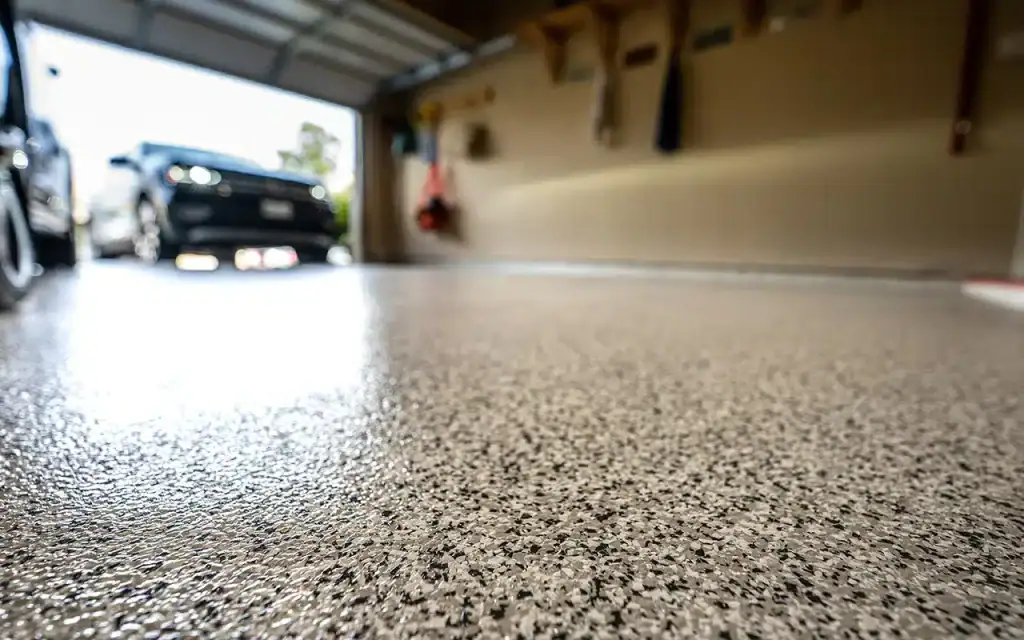
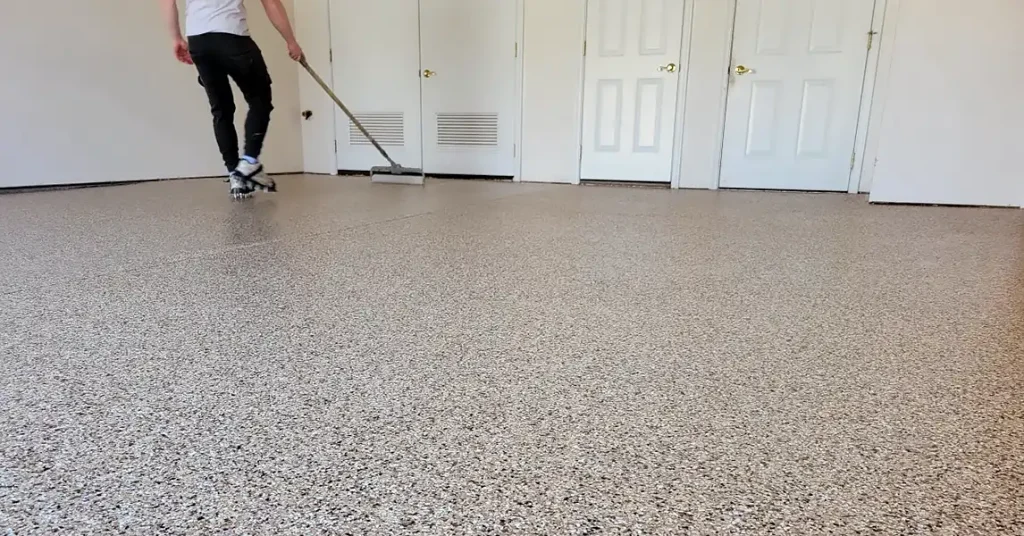
A beautiful epoxy garage floor does not start with the coating.
It starts with the prep.
Many homeowners focus on the floor’s final look. They think about color, flakes, gloss, and how clean the garage will feel once the project is complete. Those details matter, but they are not the foundation of a long-lasting epoxy floor.
The real foundation is the concrete beneath the coating.
If the concrete is not prepared correctly, even a high-quality epoxy system can fail. The coating may peel, bubble, chip, separate, or wear unevenly. That is why garage floor epoxy prep for Torrance homeowners is not a small step. It is one of the most important parts of the entire project.
For garages in Torrance, proper prep can be especially important. Many homes have garage floors that have been used for years as parking areas, storage zones, laundry spaces, workshops, and everyday entry points.
Over time, concrete can collect oil, dust, tire marks, moisture, cracks, stains, and old coatings. Some of these issues are easy to see. Others are hidden until the surface is inspected closely.
Before epoxy is applied, the floor must be cleaned, opened, repaired, and checked for moisture concerns. The three major prep steps that matter most are diamond grinding, crack repair, and moisture testing.
Each step helps the coating bond better, look smoother, and last longer.
Why Epoxy Prep Is More Important Than Many Homeowners Realize
Epoxy is not like regular wall paint.
It is a coating system that needs to bond tightly to concrete. If the concrete surface is weak, dirty, sealed, damp, or too smooth, the epoxy may not grip as well as it should.
That bond is what keeps the coating attached to the garage floor.
When prep is skipped or rushed, the coating may look good at first. The problem usually appears later. Tire traffic, foot traffic, stored items, moisture, and temperature changes can expose weak adhesion.
This is when peeling, flaking, bubbling, or lifting can happen.
A properly prepared garage floor provides epoxy with a suitable surface to adhere to. It removes surface barriers, repairs visible damage, and helps identify moisture concerns before the coating is installed.
For Torrance homeowners, that can make the difference between a garage floor that looks good for a short time and one that performs well for years.
Good prep may not be the most exciting part of the project, but it is the part that protects the investment.
What Happens When Garage Floor Prep Is Skipped?
Skipping prep can lead to serious coating problems.
One of the most common issues is peeling. This happens when the epoxy does not bond tightly to the concrete. The coating may begin lifting near tire paths, edges, cracks, or areas with old stains.
Another issue is bubbling. If moisture or trapped air is present below the coating, bubbles may form after installation.
Chipping can also happen when the surface beneath the epoxy is weak or poorly prepared. The coating may break away under impact or pressure.
Uneven texture is another concern. If cracks, pits, or rough spots are not repaired, they may show through the finished floor.
Poor prep can also make the floor look patchy. Areas with oil, dust, sealers, or previous coatings may react differently when epoxy is applied.
The result is a floor that does not look or perform the way it should.
That is why professional epoxy garage floor prep is not just about making the concrete look clean. It is about creating the right surface for a strong bond.
Step One: Diamond Grinding the Garage Floor
Diamond grinding is one of the most important steps in garage floor epoxy prep.
It uses grinding equipment with diamond tooling to remove the top layer of the concrete surface. This process helps open the concrete’s pores and creates a surface profile that allows epoxy to bond more effectively.
Concrete may look solid and ready for coating, but the surface can have hidden barriers. These may include dirt, old sealers, tire residue, weak concrete, paint, dust, or surface contaminants.
Diamond grinding helps remove those barriers.
It also smooths minor roughness and prepares the floor for repair work and coating application.
For Torrance garages, diamond grinding is often a better prep method than simple cleaning alone. Sweeping and washing may remove loose dirt, but they do not properly profile the concrete.
Epoxy needs more than a clean floor. It needs a prepared floor.
Diamond grinding creates the surface texture needed for adhesion.
Why Diamond Grinding Helps Epoxy Bond Better
A garage floor can be too smooth for epoxy to bond well.
This is especially true if the concrete has been sealed, polished by years of traffic, or coated in the past. A smooth surface may not give the epoxy enough grip.
Diamond grinding changes that.
Lightly opening the concrete surface creates a stronger mechanical bond. This means the epoxy has more surface area to which it can attach.
Think of it like sanding wood before painting. Paint sticks better when the surface is properly prepared. Epoxy works the same way, but the concrete needs stronger prep than basic sanding.
Without proper profiling, epoxy may sit on the surface of the concrete rather than bond into it. That can lead to peeling and lifting later.
Diamond grinding helps avoid that problem by preparing the slab for the coating system.
For homeowners researching garage floor epoxy prep in Torrance, this is one of the most important details to understand. The final coating is only as strong as the surface it bonds to.
Diamond Grinding vs Acid Etching
Some homeowners hear about acid etching as a way to prepare concrete for epoxy.
Acid etching uses an acid solution to roughen the concrete surface. It may seem simple, but it is not always the best option for garage floors.
Diamond grinding is often preferred because it gives better control over the surface profile. It can also remove more surface contaminants and weak material than acid etching alone.
Acid etching may not remove oil, sealers, old coatings, or deeper surface problems. It also introduces liquid to the concrete, which may create moisture concerns if the floor is not allowed to dry properly.
Diamond grinding is a more controlled method because it mechanically prepares the surface.
It can help expose cracks, weak spots, and areas that need repair before coating begins.
For a garage floor that needs a durable epoxy finish, grinding is usually a stronger preparation method than relying only on acid etching.
Step Two: Repairing Cracks Before Epoxy
Cracks are common in garage floors.
Some are small hairline cracks. Others are wider, deeper, or connected to slab movement. Before epoxy is applied, these cracks should be inspected and repaired as needed.
Crack repair helps create a smoother surface and reduces the chance of visible flaws showing through the finished coating.
It also helps prevent the epoxy from sinking into open cracks or leaving uneven lines across the floor.
Garage cracks can happen for many reasons. Concrete may shrink as it cures. The ground beneath the slab may shift slightly. Heavy loads, age, moisture, or previous damage can also play a role.
Not every crack is a major concern, but cracks should not be ignored.
A professional can assess the crack pattern, width, and condition to determine how it should be handled before coating.
Proper crack repair helps the epoxy floor look better and perform better.
Why Crack Repair Affects the Final Look
Epoxy can improve the appearance of a garage floor, but it does not magically erase every flaw in the concrete.
If cracks are not repaired before coating, they may remain visible. In some cases, the coating may settle into the cracks, creating lines or uneven areas in the finished floor.
Decorative flakes can help hide minor imperfections, but they are not a substitute for repair work.
A better approach is to repair cracks before applying the coating system.
This can help create a cleaner and more consistent finished surface.
For Torrance homeowners who want the garage to look polished and finished, crack repair is an important prep step.
The goal is not just to cover the concrete. The goal is to prepare it so the finished floor looks intentional, clean, and durable.
How Crack Repair Supports Long-Term Performance
Crack repair is not only about appearance.
It also supports long-term performance.
Open cracks can collect dust, moisture, and debris. They can also create weak points in the coating system. If epoxy bridges an unrepaired crack, movement in the concrete may eventually cause the coating to split or show signs of stress.
Repairing cracks before coating helps reduce these issues.
It provides a more stable surface and reduces the risk of early wear around damaged areas.
This is especially important in garages that see regular vehicle traffic, heavy storage, or frequent use as a workspace.
A garage floor coating should be able to handle daily life. Crack repair helps make that possible by addressing weak areas before the coating is installed.
Step Three: Moisture Testing the Concrete
Moisture testing is another critical part of garage floor epoxy prep.
Concrete can hold moisture even when it looks dry. Moisture may come from the ground below the slab, humidity, previous cleaning, leaks, or poor drainage around the garage.
If moisture is trapped beneath an epoxy coating, it can create problems.
The coating may bubble, blister, peel, or separate from the concrete. In some cases, moisture vapor pressure can push against the coating from below.
This is why testing matters.
Moisture testing helps determine whether the floor is ready for epoxy or whether moisture issues need to be addressed first.
For Torrance garages, moisture can be influenced by coastal conditions, home age, slab condition, and how the garage is used.
A floor that appears dry on the surface may still have moisture concerns below.
Why Moisture Can Cause Epoxy Failure
Epoxy creates a protective coating over concrete. That protective surface is one of the reasons homeowners like it.
However, if moisture is coming through the slab, that coating can trap moisture below the surface.
When moisture vapor rises through concrete and cannot escape easily, pressure can build under the coating.
This may lead to bubbles, blisters, cloudy areas, peeling, or weak adhesion.
Moisture can also interfere with the bond between epoxy and concrete during installation. If the slab is too damp, the coating may not adhere properly from the start.
This is why moisture testing should happen before coating begins.
It is better to identify moisture concerns early than to find out after the floor is already coated.
A successful epoxy floor starts with knowing the condition of the concrete.
Common Signs Your Garage Floor May Need Extra Prep
Some signs of needed prep are easy to spot.
If your garage floor has visible cracks, it likely needs repair before epoxy.
If the concrete has oil stains, tire marks, peeling paint, or old coating residue, those areas need attention before coating.
If the surface feels dusty no matter how often it is swept, the concrete may have surface weakness or dusting.
If water beads on the surface, the floor may have an old sealer that needs to be removed.
If there are dark spots, damp areas, or musty smells, moisture may be a concern.
If the floor has pits, chips, or rough patches, those areas may need patching or grinding.
These signs do not mean epoxy is impossible. They simply mean prep is needed before the floor can be coated correctly.
For homeowners planning garage floor epoxy prep in Torrance, these signs are a helpful starting point before scheduling a professional evaluation.
Why Old Coatings Must Be Removed
Many garage floors have been painted or coated before.
Some homeowners may not know what product was used. It may have been garage floor paint, sealer, stain, or an older epoxy product.
If that old coating is peeling, weak, or poorly bonded, it should not be coated over.
A new epoxy floor is only as strong as what it is attached to. If the new coating is applied over a failing old coating, the new system may fail too.
Diamond grinding can help remove old coatings and expose the concrete underneath.
This gives the new epoxy system a better chance to bond directly to the slab.
Covering over old, unknown, or weak coatings may seem faster, but it can create problems later.
Proper prep means removing anything that could interfere with adhesion.
Why Oil and Stains Need Special Attention
Garages often have oil stains, fluid spills, and tire marks.
These can interfere with epoxy bonding.
Oil is especially difficult because it can soak into the concrete. Even if the surface looks cleaner after washing, oil may still be present beneath it.
If epoxy is applied over contaminated concrete, it may not bond properly in that area.
That can lead to peeling, fisheyes, soft spots, or uneven finish.
During prep, stained areas may need degreasing, grinding, or additional treatment before coating.
Not every stain is the same. Some are surface-level. Others are deeper.
A professional inspection can help determine how much prep is needed.
Cleaning is important, but cleaning alone may not be enough to remove stains from garage floors.
How Prep Impacts the Finished Floor Appearance
The final appearance of an epoxy garage floor depends heavily on prep.
A well-prepared floor is more likely to look smooth, even, and consistent.
A poorly prepared floor may show cracks, rough spots, coating defects, bubbles, or uneven texture.
Decorative flakes can help create a more forgiving finish, but they cannot fix poor adhesion or hidden moisture problems.
Prep also affects how the coating lays down. If the surface is uneven, contaminated, or weak, the coating may not flow or bond correctly.
That can make the finished floor look less professional.
For Torrance homeowners who want the garage to feel cleaner and more finished, prep is a major factor in the final result.
The better the prep, the better the floor can look.
How Prep Impacts Durability
Durability is one of the main reasons homeowners choose epoxy.
They want a floor that can handle vehicles, storage, tools, foot traffic, and everyday use.
Proper prep makes that durability possible.
Diamond grinding helps the coating bond. Crack repair reduces weak areas. Moisture testing helps avoid hidden moisture problems. Cleaning removes contaminants that could interfere with adhesion.
Each step supports the next.
When prep is done correctly, the coating system has a stronger foundation.
When prep is skipped, the coating may be more likely to fail early.
This is why homeowners should be careful when comparing epoxy floor estimates. A lower price may not include the same level of prep.
The prep work may not be as visible as the final coating, but it has a major impact on how long the floor lasts.
What Professional Garage Floor Epoxy Prep Usually Includes
Professional garage floor prep often starts with an inspection.
The installer assesses the condition of the concrete, looking for cracks, stains, moisture concerns, old coatings, surface damage, and other issues.
Next, the floor is cleared and cleaned.
The surface is then mechanically prepared, often using diamond grinding, to achieve the correct profile for epoxy.
Cracks and surface defects are repaired.
Oil stains or contaminated areas may receive extra attention.
Moisture testing may be done to help determine whether the floor is ready for coating.
Once the concrete is properly prepared, the epoxy system can be applied.
This process helps reduce risk and supports a better finished result.
Why DIY Prep Often Falls Short
DIY epoxy kits may seem simple, but the prep is often where homeowners run into trouble.
Many kits focus on cleaning and etching, but garage floors often need more than that.
Without proper grinding equipment, it can be difficult to achieve the desired concrete profile.
Without the right repair products, cracks may remain visible or unstable.
Without moisture testing, hidden slab moisture may go unnoticed.
Without experience, it can be difficult to identify old sealers, weak concrete, or contamination that may affect adhesion.
The result may look good at first, but problems can appear after the garage returns to normal use.
DIY prep can also be time-consuming and messy.
For homeowners who want a stronger, longer-lasting result, professional prep is often worth it.
Why Torrance Homeowners Should Not Rush Epoxy Prep
Garage floor coating projects can be exciting because the transformation is easy to imagine.
A stained or dusty garage floor can be cleaned, brightened, and finished. That can make homeowners eager to get to the coating stage quickly.
But rushing prep is a mistake.
Epoxy needs the right foundation.
Taking time to grind, repair, clean, and test the concrete helps ensure a high-quality final result.
In Torrance, homes and garages may vary widely in age and condition. Some floors may be newer and need lighter prep. Others may have years of wear, cracks, stains, and old coatings.
The prep process should match the actual floor.
A one-size approach is not ideal because every slab has its own condition.
Proper prep helps make sure the coating system is chosen and applied with the floor’s condition in mind.
Choosing the Right Epoxy Prep Team in Torrance
Choosing the right team matters because prep is not just a checklist.
It requires knowing what to look for and how to handle different concrete conditions.
A good epoxy prep team should inspect the floor, explain needed repairs, discuss moisture concerns, and prepare the concrete before applying the coating.
They should not simply cover cracks, stains, dust, or old, failing material.
Homeowners should ask what prep steps are included in the estimate. Ask whether the floor will be diamond ground. Ask how cracks will be repaired. Ask whether moisture will be checked if there are signs of concern.
Clear answers help you understand what you are paying for.
The quality of the prep often shows in the finished floor.
For homeowners searching for garage floor epoxy prep in Torrance, the best choice is a team that treats preparation as a key part of the project, not an optional extra.
Final Thoughts on Garage Floor Epoxy Prep in Torrance
Epoxy garage flooring can be a great upgrade for Torrance homes, but the final result depends heavily on preparation.
Diamond grinding helps create the right surface for adhesion.
Crack repair helps improve appearance and reduce weak points.
Moisture testing helps identify hidden risks before coating begins.
Together, these steps help the epoxy system bond better, look better, and last longer.
Skipping prep may save time upfront, but it can lead to peeling, bubbling, cracking, and early failure later.
A garage floor coating is an investment in the look and function of your home. That investment deserves the right foundation.
If you are planning an epoxy garage floor, do not focus only on color and finish. Pay close attention to the prep.
For Torrance homeowners, proper garage floor epoxy prep can be the difference between a floor that looks good at first and one that performs well for years.
Garage Floor Epoxy Prep FAQs
Why is garage floor epoxy prep so important?
Garage floor epoxy prep is important because epoxy needs a clean, profiled, and stable concrete surface to bond correctly. Without proper prep, the coating may peel, bubble, chip, or wear unevenly. Prep helps create the foundation for a longer-lasting garage floor.
What is diamond grinding for epoxy floors?
Diamond grinding is a mechanical prep method that uses diamond tooling to remove surface contaminants and open the concrete. It creates a better surface profile, allowing epoxy to bond more strongly to the garage floor.
Do cracks need to be repaired before epoxy is applied?
Yes, cracks should usually be repaired before epoxy is applied. Crack repair helps create a smoother finish, reduces weak points, and prevents open cracks from showing through the finished coating.
Why does moisture testing matter before epoxy coating?
Moisture testing matters because concrete can hold moisture even when it looks dry. If moisture is trapped under epoxy, it can cause bubbling, blistering, peeling, or poor adhesion. Testing helps identify moisture concerns before coating begins.
Can epoxy be applied over an old garage floor coating?
Epoxy should not be applied over an old coating unless that coating is strongly bonded and properly prepared. If the old coating is peeling, weak, or unknown, it should usually be removed so the new epoxy can bond directly to the concrete.

David Cooley, the esteemed owner of Cooley Brothers Painting, has established himself as a leading figure in the painting industry. With a rich history of delivering unparalleled service in Torrance, Manhattan Beach, Palos Verdes Estates, Redondo Beach, and Rolling Hills, his hands-on approach and dedication to quality have shaped Cooley Brothers Painting into a trusted name for exceptional painting services. With a focus on innovation, customer satisfaction, and community engagement, David’s leadership continues guiding his team toward new heights of excellence and reliability in every project.