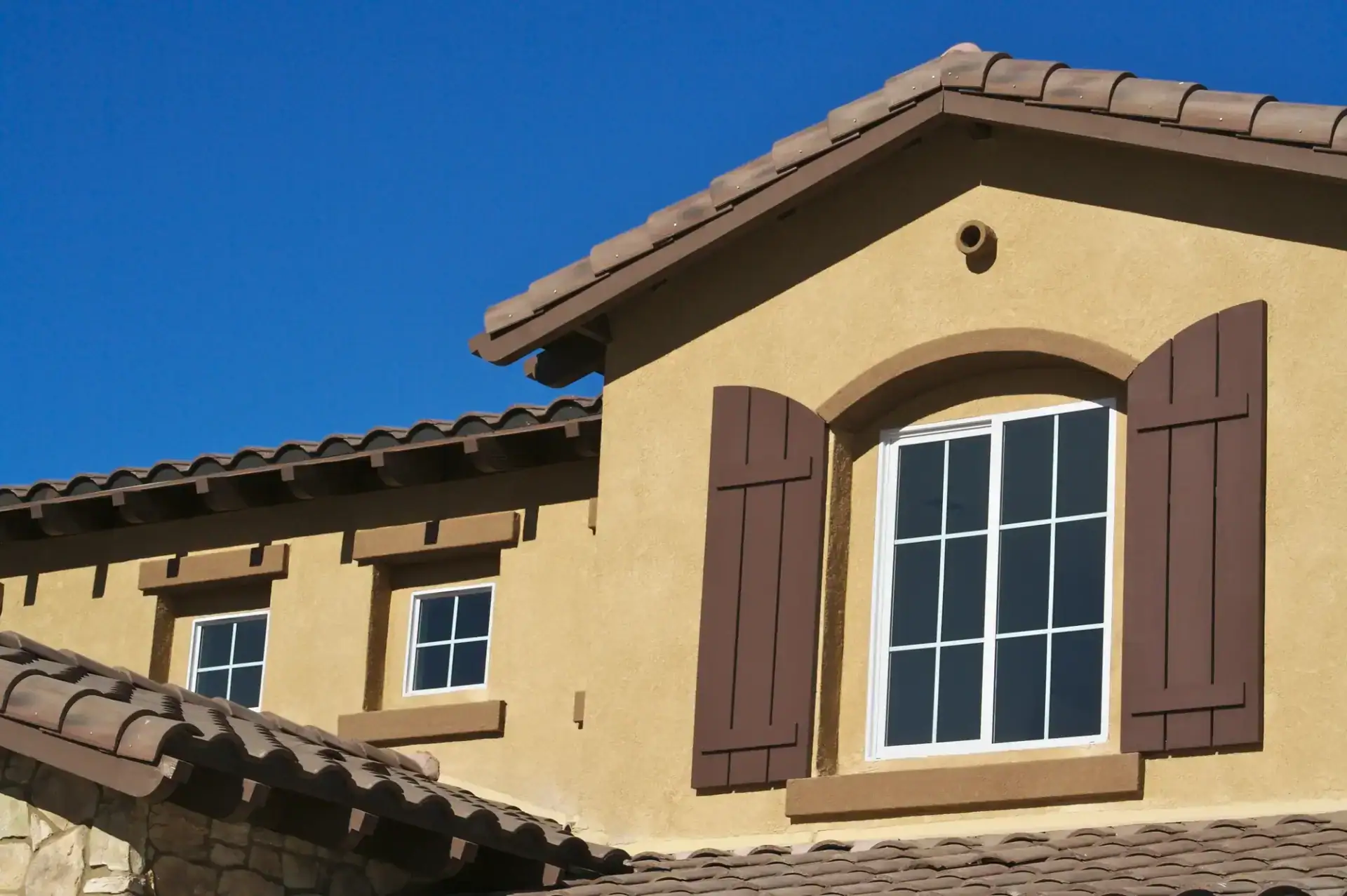
Stucco is everywhere on the Peninsula — and it needs the right care to look good and last. Here’s what you’ll learn: how stucco painting differs from other exteriors, which coatings work best on the coast, and how to keep it sealed against moisture.
Stucco painting in the South Bay protects the surface from moisture and salt air while refreshing your home’s look — but it depends on repairing cracks first and using breathable, flexible coatings. Stucco is porous and prone to hairline cracking, so proper prep and the right paint are what keep water out and the finish lasting. Done well, a stucco repaint can last many years even in coastal conditions.
Why does stucco need special care?
Stucco is a cement-based surface that’s durable but porous, which means it absorbs water if left unsealed. On the coast, salt air and marine-layer moisture make that a bigger concern — trapped moisture leads to staining, efflorescence, and cracking.
Stucco also moves slightly with temperature swings, which causes the hairline cracks you often see on older homes. Painting stucco well means sealing those cracks and using a coating flexible enough to move with the surface.
How is painting stucco different?
Stucco isn’t like painting wood siding. It has deep texture that requires more paint and the right application to cover evenly, it must be crack-repaired first, and it benefits from coatings designed to breathe. Trapping moisture behind the wrong paint can do more harm than leaving it unpainted.
That’s why stucco painting is really a prep-and-repair job as much as a painting job — the finish is only as good as the patching and sealing underneath.
What coatings work best on coastal stucco?
Coating choice matters a lot on stucco. Here’s how the common options compare:
| Coating | Strengths | Best for |
|---|---|---|
| Acrylic masonry paint | Breathable, good color range | Sound stucco in good shape |
| Elastomeric coating | Thick, flexible, bridges hairline cracks | Older, crack-prone stucco |
| Mineral/silicate paint | Highly breathable, durable | Moisture-sensitive walls |
Elastomeric coatings are popular on the coast because they flex over hairline cracks and add a waterproof layer, though they must be applied correctly over properly prepped stucco. A professional helps match the coating to your home’s condition.
What’s the stucco painting process?
A quality stucco repaint follows a clear sequence:
- Wash the stucco to remove salt, dirt, chalk, and mildew.
- Repair cracks, chips, and any damaged or loose stucco.
- Let repairs cure and the surface dry fully.
- Prime where needed, especially on repairs and bare patches.
- Apply quality masonry or elastomeric coating, usually two coats.
- Seal joints and transitions to keep moisture out.
Because crack repair is central to the job, stucco painting overlaps with exterior painting and surface repair. Our guide on how long exterior paint lasts in the South Bay explains how coastal conditions affect any exterior finish.
How do you maintain painted stucco?
Keeping stucco in good shape is mostly about catching small issues early. Rinse salt and dirt off periodically, watch for new hairline cracks and seal them before they widen, address any moisture or drainage issues quickly, and plan a repaint before the coating fully wears through. Caught early, stucco maintenance is simple and inexpensive.
Protect your stucco home
Cooley Brothers Painting repairs, seals, and repaints stucco exteriors built to handle coastal conditions. Our experienced painters in Rancho Palos Verdes proudly serve Torrance and the Palos Verdes Peninsula / South Bay, CA, including Manhattan Beach, Palos Verdes Estates, Rancho Palos Verdes, Redondo Beach, Rolling Hills, and Rolling Hills Estates. Call (310) 378-4575 or visit our contact page to schedule your estimate.
Frequently Asked Questions
How often should stucco be repainted?
Painted stucco typically needs repainting every 7 to 10 years, though coastal homes may need it sooner because salt air and sun wear the coating faster. Catching and sealing hairline cracks between repaints extends the finish and protects the stucco underneath.
Do you need special paint for stucco?
Yes. Stucco needs breathable masonry paints or flexible elastomeric coatings that can handle its porous, crack-prone surface. Using the wrong paint can trap moisture behind the stucco and cause more damage, so coating choice should match the wall’s condition.
Should cracks be repaired before painting stucco?
Always. Stucco develops hairline and larger cracks that let water in, so they must be repaired and sealed before painting. Painting over unrepaired cracks traps moisture and causes the coating to fail quickly.
What is elastomeric paint for stucco?
Elastomeric coating is a thick, flexible paint that stretches over hairline cracks and forms a waterproof layer, making it popular for older, crack-prone stucco on the coast. It must be applied correctly over properly prepped stucco to perform well.
Can painting stucco stop moisture problems?
Proper painting with the right breathable or elastomeric coating helps seal stucco against moisture, but it works only when cracks are repaired and any underlying drainage or leak issues are fixed first. Paint alone won’t solve a water-intrusion problem.
 David Cooley
, owns Cooley Brothers Painting, the family-owned company he started in 2009. He walks jobs with homeowners at the start, checks on progress and comes back himself if something needs attention. The company serves Torrance and the South Bay from its Torrance office.

Family-owned painters in Torrance, CA since 2009. CA CSLB License #957815.